Seasonal pool care in Naples: hurricane prep and getting ready for snowbird season
By Nadia Nathan · Updated 2026-07-21
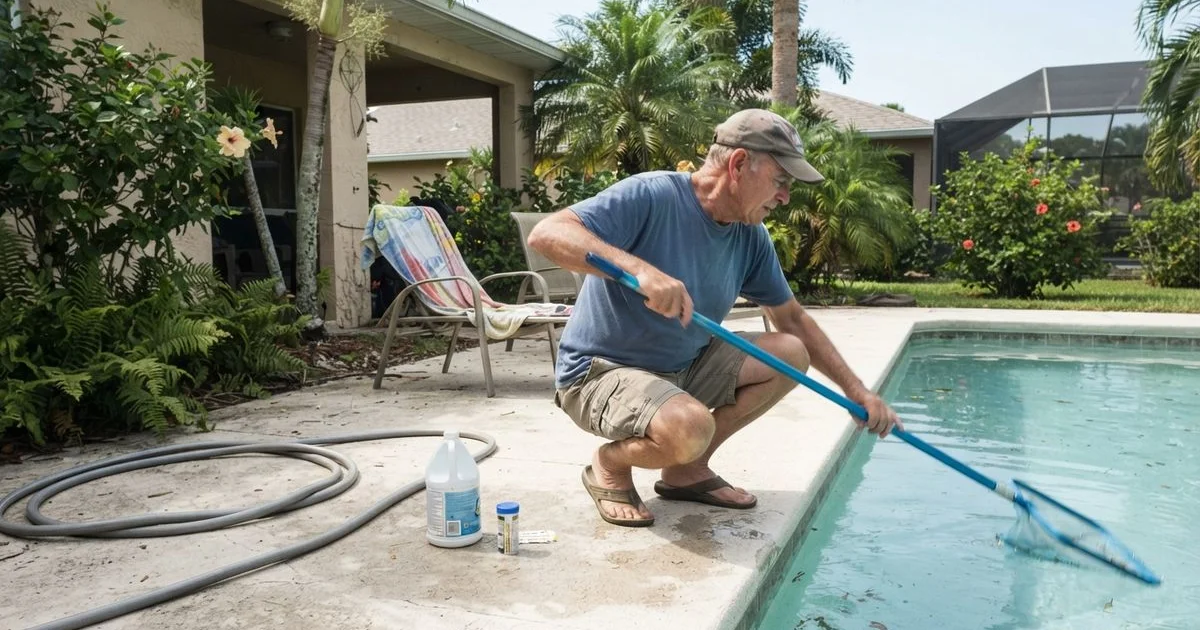
Naples pool ownership comes with two seasonal rhythms most homeowners elsewhere don’t deal with: hurricane season prep, and managing a pool through the extended absences common among the area’s seasonal residents. Both are manageable with a bit of planning.
Hurricane prep: what actually helps
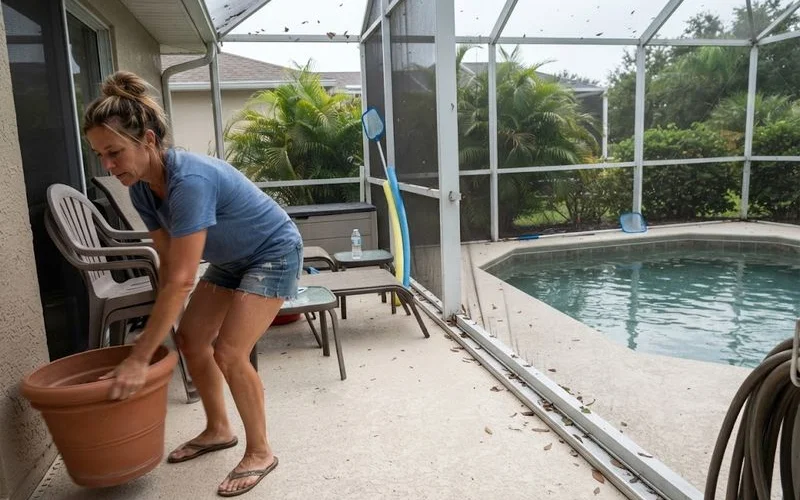
Contrary to instinct, don’t drain the pool before a storm. A full pool adds weight and stability against ground and wind pressure, while an empty shell is more vulnerable to shifting, cracking, or even floating in extreme groundwater conditions. What does help: securing or removing loose pool furniture, toys, and anything that could become wind-driven debris, and shutting down or covering exposed equipment if a direct hit is expected.
Screen enclosures deserve particular attention, since they’re a common point of storm damage in this area. If you have one, check that panels are properly secured well before a storm is close, and know that many, though not all, homeowners policies address wind damage to enclosures, worth confirming with your insurer during a calm season rather than finding out after a claim.
| Storm prep step | Why it matters |
|---|---|
| Leave the pool full | Adds structural stability against wind and ground pressure |
| Secure or remove loose items | Prevents wind-driven debris and equipment damage |
| Check screen enclosure panels | Common storm damage point in this area |
| Confirm insurance coverage ahead of time | Wind damage terms vary by policy |
| Know your service provider’s storm protocol | Response times get busy fast once a storm is close |
After the storm passes
Once it’s safe to check, look for debris in the pool and skimmer baskets, any visible damage to the equipment pad or enclosure, and test water chemistry before assuming it’s fine, since heavy rain dilutes chemical balance and debris can introduce contaminants. If equipment lost power for an extended period, a professional check before restarting it is a reasonable precaution rather than an unnecessary expense.
A basic hurricane season checklist
Before the season ramps up, it’s worth confirming a few things while there’s no active storm to react to: that your service provider has a stated storm protocol and current contact information on file, that your insurance policy’s wind and pool-related terms are clear to you, and that you know where to shut off equipment power quickly if needed. Doing this in a calm week beats trying to figure it out while a storm is already being tracked toward Southwest Florida. It’s also worth keeping a printed copy of key contacts and your policy summary somewhere accessible, since power and internet access can go down right when you’d otherwise look these up online.
Managing a pool during extended absences
Naples has a large seasonal population, and leaving a pool unattended for weeks or months at a time is common enough that it’s worth planning for specifically. The key mistake to avoid is shutting the pump off entirely to save on running costs. Standing water in Florida heat and sun turns green within days, and reviving a badly neglected pool costs far more than the electricity saved by turning the pump off. Keep the pump running on its normal schedule, or a modestly reduced one, and arrange for a maintenance service to physically check on the pool periodically while you’re away, not just run on autopilot.
Coming back after time away
If you’re returning after an extended absence, expect the water to need a rebalancing period even if it looks clear, and check equipment that’s been running unattended for signs of wear before assuming everything held up fine. A pre-arrival service visit, timed for a day or two before you land, is a common and worthwhile arrangement with local providers who understand the snowbird rhythm.
Our emergency and same-day service hub lists local providers who can respond quickly if you need help before a storm or discover damage afterward. Our methodology explains how we rank those listings, and our home page links to related guides on maintenance costs and equipment problems.
A pool that’s planned for around Naples’s actual seasonal rhythm, storms and snowbird absences alike, stays in far better shape than one managed reactively.
FAQ
- Should I drain my pool before a hurricane?
- No, a full pool actually helps stabilize the structure against ground pressure and wind, and a drained pool can be at greater risk of shifting or cracking. Instead, focus on protecting equipment and securing loose items around it.
- What should I do with my pool if I leave Naples for several months?
- Keep the pump running on a normal or slightly reduced schedule rather than shutting it off entirely, since standing, unfiltered water in Florida heat turns green quickly. Arrange for a maintenance service to check on it periodically while you're away.
- Is homeowners insurance likely to cover storm damage to a pool or screen enclosure?
- Many policies address wind damage to structures like a screen enclosure, but coverage details and exclusions vary by policy, so check your specific policy or ask your agent before storm season rather than assuming.
- How far in advance should I prep the pool before a storm?
- As soon as a storm is being tracked toward the area, not when it's imminent. Securing loose equipment, patio furniture, and confirming your service provider's storm protocol takes some lead time, and providers get busy fast once a storm is close.