Pool pump and heater problems in Naples: common causes, what's DIY-fixable and when to call a pro
By Nadia Nathan · Updated 2026-07-24
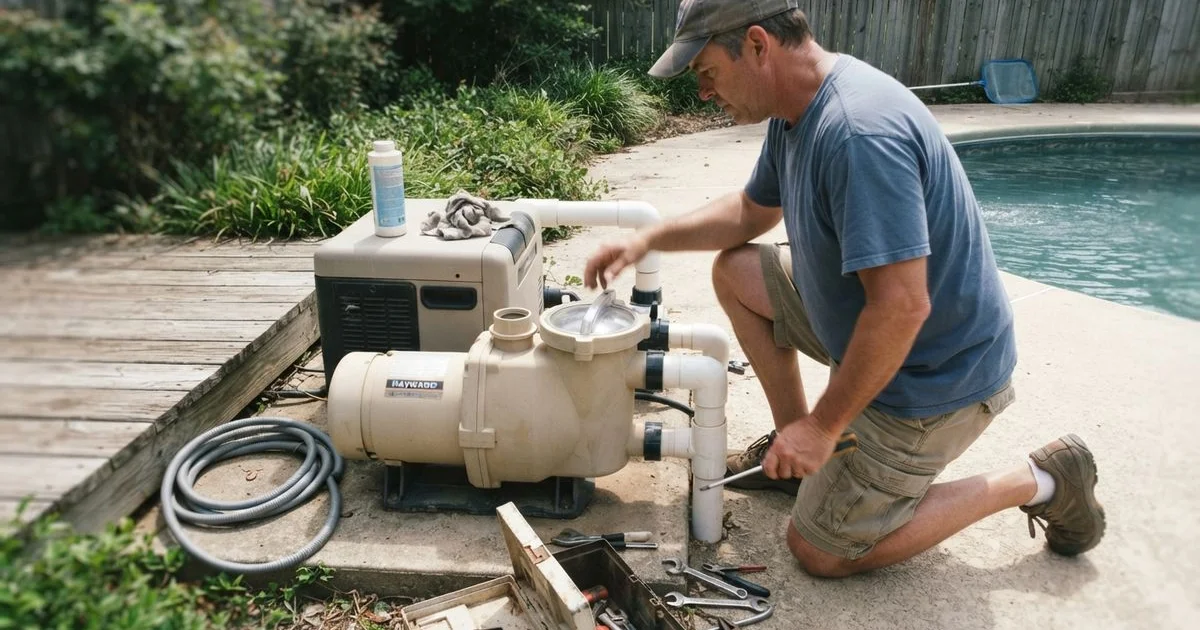
Pump and heater problems are the single most common reason Naples pool owners end up calling a repair company. Here’s how to tell what’s actually happening, what you can reasonably check yourself, and what needs a professional right away.
Pump problems: what’s going on and what to do
Loud grinding or screeching noise. This is almost always a failing motor bearing, and it gets worse quickly if you keep running it. Turn it off and call a technician rather than waiting to see if it resolves itself, since a seized motor is a more expensive fix than a bearing caught early.
Pump running but weak or no water flow. Check the skimmer and pump baskets for debris first, this is genuinely DIY-fixable and the most common cause. If baskets are clear and flow is still weak, it could be a clogged impeller, an air leak in the suction line, or a failing filter, which are more reasonably left to a technician.
Pump won’t turn on at all. Confirm it’s actually getting power (breaker, GFCI reset) before assuming the pump itself has failed, this takes two minutes and rules out the simplest cause. If power is confirmed and it still won’t start, the motor or capacitor has likely failed and needs a professional.
Visible leaking. A slow drip from a seal is worth scheduling a repair soon rather than urgently. Heavy leaking, or a pump that’s shut itself off (many have safety cutoffs), is worth treating as more urgent, since it can point to a bigger problem or risk further damage the longer it runs.
| Symptom | Likely cause | DIY-checkable? |
|---|---|---|
| Grinding or screeching noise | Failing motor bearing | No, call a technician |
| Weak flow, baskets clear | Clogged impeller or air leak | Usually needs a technician |
| Weak flow, baskets full | Debris blocking intake | Yes, clear the baskets |
| Won’t power on | Tripped breaker/GFCI, or failed motor | Check power first, then call if needed |
| Visible leak | Worn seal or bigger failure | Check the source, repair by a pro |
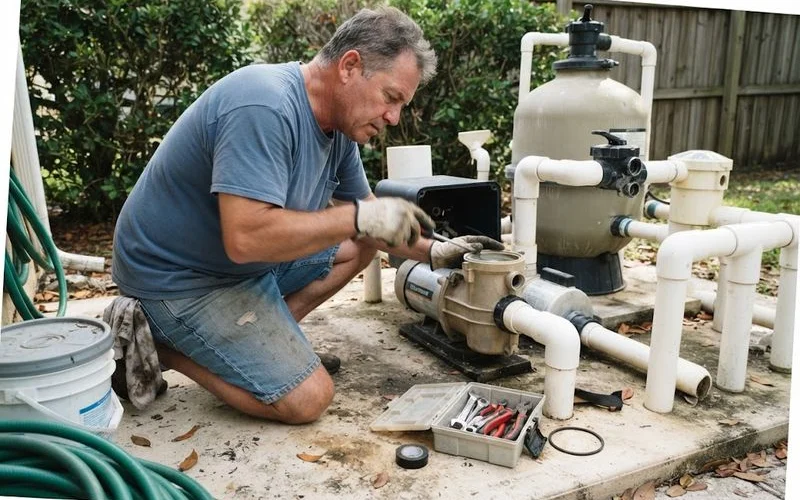
Heater problems: what’s going on and what to do
Running but not actually heating. Start with the filter, a dirty or clogged filter restricts flow enough that a heater can’t do its job even when it’s functioning correctly, and cleaning it is a simple DIY step. If the filter is clean and the water still isn’t warming, a gas heater may have an ignition or gas valve issue, and a heat pump may have a refrigerant or airflow problem, both are technician territory.
Heater won’t turn on. Check the thermostat setting and power or gas supply first. Beyond that, ignition components, control boards, and refrigerant systems all require diagnostic tools and training most owners don’t have on hand.
Short cycling (turns on and off repeatedly). This usually points to a flow, thermostat, or safety sensor issue and is worth a technician visit before it causes more wear on the unit.
Preventing the common failures in the first place
Most pump and heater problems trace back to a handful of preventable causes: a neglected filter restricting flow, algae or debris buildup straining the pump, or equipment left exposed to direct sun and salt air without basic upkeep. A routine maintenance visit that includes checking filter condition and listening for early pump noise catches most of this before it becomes a breakdown. It’s a smaller cost than an emergency call-out, and considerably smaller than replacing equipment that failed because a warning sign went unnoticed.
When it’s worth repairing versus replacing
Pumps commonly last around a decade with reasonable upkeep, sometimes less under heavy year-round use. Heaters vary more by type. If a unit is already near or past its typical lifespan and the repair is a significant one, it’s worth asking your technician for a straight comparison of repair cost versus replacement, rather than assuming repair is automatically the cheaper path.
Our pool repair and equipment hub lists local technicians who handle both pump and heater diagnostics and repair. Our methodology explains how those listings are scored, and our home page links to related guides on maintenance costs and seasonal pool care.
Catching the simple, DIY-checkable causes yourself, like clogged baskets or a dirty filter, saves an unnecessary service call, while recognizing the signs that mean “call now” prevents a small problem from becoming an expensive one.
FAQ
- Why does my pool pump make a loud grinding or screeching noise?
- That's almost always a bearing failure inside the motor, and it will get worse, not better, if left running. It's not typically a DIY fix and is worth having a technician look at before the motor fails completely.
- Why is my pool heater running but not actually heating the water?
- Common causes include a dirty filter restricting water flow, a tripped gas valve or ignition issue on a gas heater, or a refrigerant or airflow issue on a heat pump. A clogged filter is worth checking yourself first since it's the simplest fix; the others usually need a technician.
- Is a leaking pump always an emergency?
- Not always, but it shouldn't wait long either. A slow drip from a seal is worth scheduling a repair for soon, while a pump leaking heavily or that has shut itself off is worth treating as more urgent, both for the equipment and to avoid a bigger repair.
- How long do pool pumps and heaters typically last?
- Pumps commonly last on the order of a decade with reasonable maintenance, sometimes less in constant heavy-use setups, while heaters vary more by type and usage but often need attention or replacement within a similar range. Age is worth factoring in before sinking money into repairing an older unit.