Do you need a permit to build or remodel a pool in Naples?
By Nadia Nathan · Updated 2026-07-01
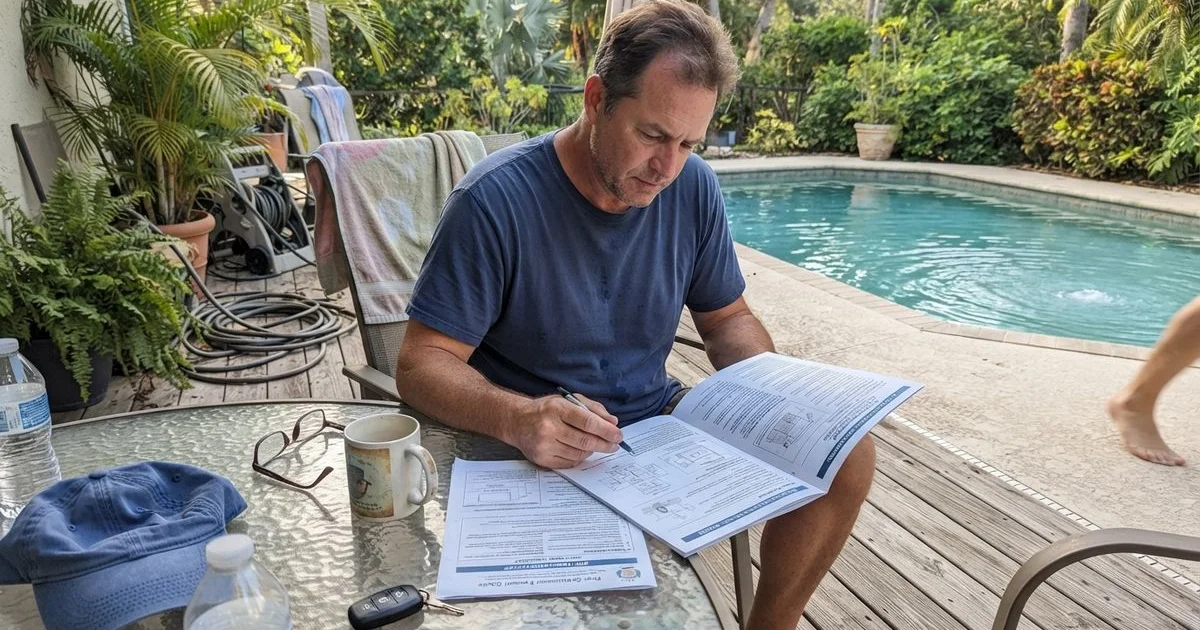
This is general information about the pool permitting process, not legal advice. Permit requirements are set and enforced locally, so confirm current, specific requirements with the Naples-area building department or your licensed contractor before starting a project.
Why permits matter beyond paperwork
A pool permit isn’t just a formality, it’s how the county verifies that the structural, electrical, and plumbing work, along with the required safety barrier, meets current code. That inspection process is a real safety check, not only a legal one. It also matters for resale: an unpermitted pool or addition can complicate a home sale, since buyers’ lenders and insurers often want to see it reflected in permit records.
What typically requires a permit
New pool construction almost always requires a permit, given the excavation, structural, electrical, and plumbing work involved. Full renovations, especially ones that change the pool’s shape, add a spa, or touch the electrical and equipment pad, usually require a new permit as well. Some smaller-scope projects, like a straightforward like-for-like resurfacing with no structural or equipment changes, may fall outside permit requirements in some jurisdictions, but this varies and is worth confirming rather than assuming.
| Project type | Permit typically needed | Why |
|---|---|---|
| New pool construction | Yes | Excavation, structural, electrical, plumbing, barrier |
| Full renovation (reshape, deck, equipment) | Yes | Structural and electrical changes |
| Resurfacing only, no structural change | Often not, confirm locally | Cosmetic finish work |
| Adding a spa, water feature or automation | Usually yes | New electrical and plumbing scope |
The typical process, and what slows it down
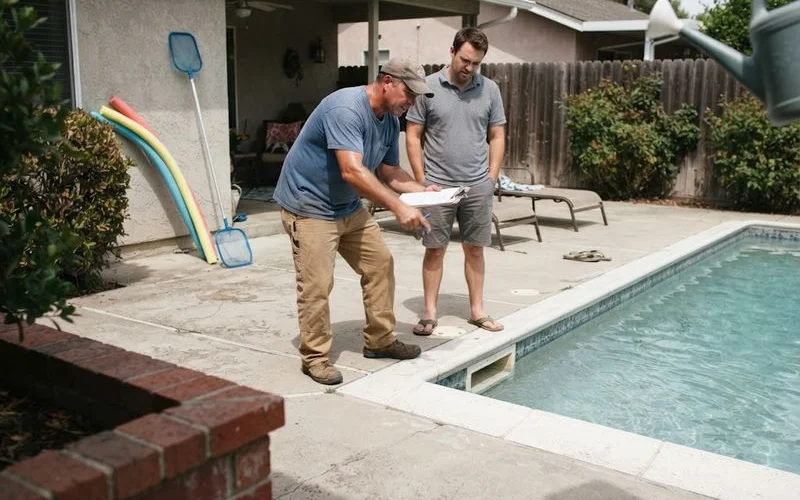
Your contractor submits the design, along with structural and safety barrier plans, to the local building department for review. Review time depends heavily on how many projects are in the queue at that moment, which fluctuates seasonally. Once approved, work proceeds under scheduled inspections at key stages (before the shell is poured or set, before decking covers plumbing, and a final inspection before the pool is approved for use). Skipping or failing an inspection stage can add real delay, since work often can’t proceed to the next stage until it’s signed off.
What to ask your contractor
Ask directly whether they’re pulling the permit, what the current expected review timeline looks like, and how many inspection stages your specific project will go through. A contractor who’s vague about any of these, or suggests skipping the permit to save time, is a real red flag, since unpermitted work creates liability for you as the homeowner, not just the contractor.
Budgeting permit costs and timing into your project
Permit fees themselves are usually a modest line item relative to overall construction or remodel cost, but they’re a real one, and a contractor’s quote should state them separately rather than folding them into a single lump sum you can’t verify. Timing matters more than the fee: build the current review timeline into your expected start date rather than assuming work can begin the moment you sign a contract, since a gap of several weeks between contract and groundbreaking is normal, not a sign of a slow contractor.
If you’re buying a home with a pool of unclear permit status
Permit history is public record in most Florida counties, and it’s worth checking before you close on a home with an existing pool, particularly if the pool or any additions look recent. An unpermitted pool can affect insurability and may need retroactive permitting, inspection, or in some cases modification to meet current code, all of which are more expensive to resolve after you own the property.
Our pool design and construction hub lists local, licensed builders who handle permitting as a standard part of the job. Our methodology explains how those listings are ranked, and our home page links to related guides on cost, process, and buying a home with an existing pool.
Confirming permit status and process upfront, before signing a contract or closing on a home, is one of the simpler steps that prevents a much bigger problem later.
FAQ
- Does every pool project in Naples need a permit?
- New construction and most full renovations do, since they involve structural work, electrical, and plumbing that local building codes regulate. Simple like-for-like resurfacing without structural changes sometimes does not, but confirm this with your local building department rather than assuming.
- Who pulls the permit, me or the contractor?
- In almost all cases, your licensed contractor pulls the permit as part of the job, since it's tied to their license and the work they're performing. Be cautious of any contractor who asks you to pull the permit yourself, since it can be a sign they aren't properly licensed or insured.
- How long does permit approval take in Naples?
- It varies with how backed up the local building department is at the time, and can range from a couple of weeks to well over a month for more complex projects. Ask your contractor for a realistic estimate based on current conditions rather than a generic timeline.
- What happens if a pool was built without the required permits?
- It can create real problems later, including trouble at resale, insurance complications, and forced retrofits to bring it up to code. If you're buying a home and the pool's permit history is unclear, it's worth having it checked before closing.
Related on this site
- Browse pool design & construction providers
- What a new pool costs in Naples and what changes the price
- What to expect when building a new pool in Naples, step by step
- Florida pool safety barrier laws: what Naples homeowners need to know
- Who's liable if someone is hurt in your pool? A Naples homeowner's guide
- All guides →