Florida pool safety barrier laws: what Naples homeowners need to know
By Nadia Nathan · Updated 2026-06-28
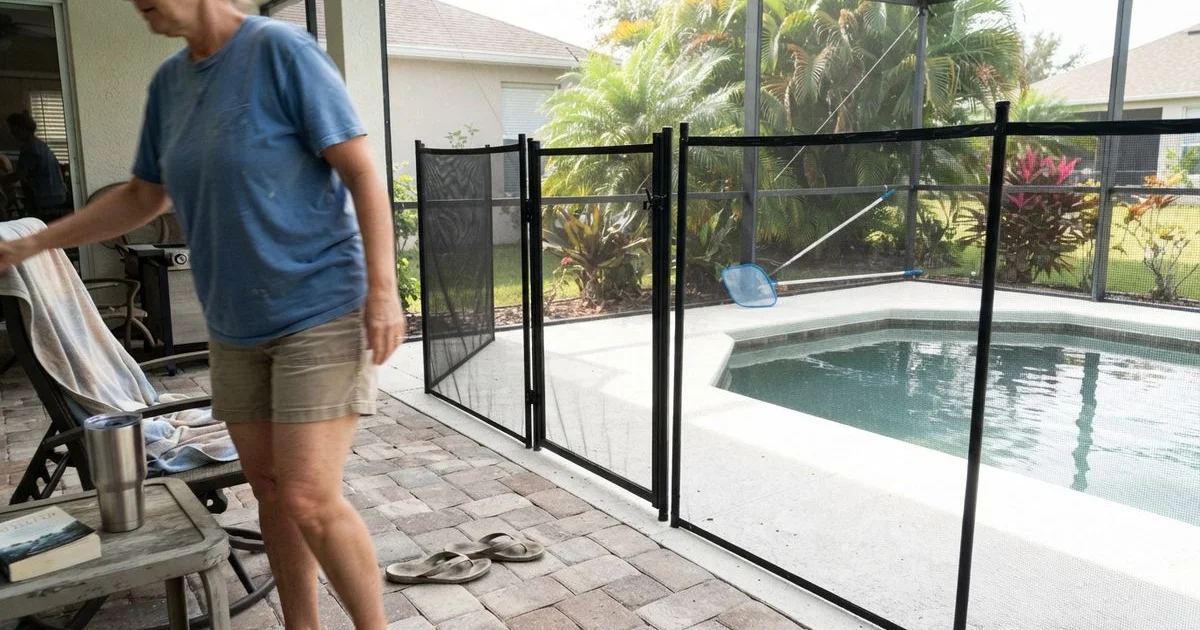
This is general information about Florida’s pool safety barrier requirements, not legal advice. Requirements can vary by county and by the specific configuration of your pool and home, so confirm the current, applicable rules with your local building department or a licensed contractor before relying on anything here.
Why this law exists
Florida has one of the highest rates of residential drowning incidents involving young children in the country, largely because so many homes have pools and children are outdoors year-round. The state’s residential swimming pool safety law was written specifically to reduce unsupervised access by children too young to recognize the danger. If you’re building, buying, or already own a pool in Naples, understanding the barrier requirement isn’t a bureaucratic box to check, it’s the single most effective layer of protection against the most common cause of pool-related child deaths.
What counts as a compliant barrier
Florida law generally requires a pool to be isolated from the rest of the property, or from the house itself, by at least one approved safety measure. Common compliant approaches include:
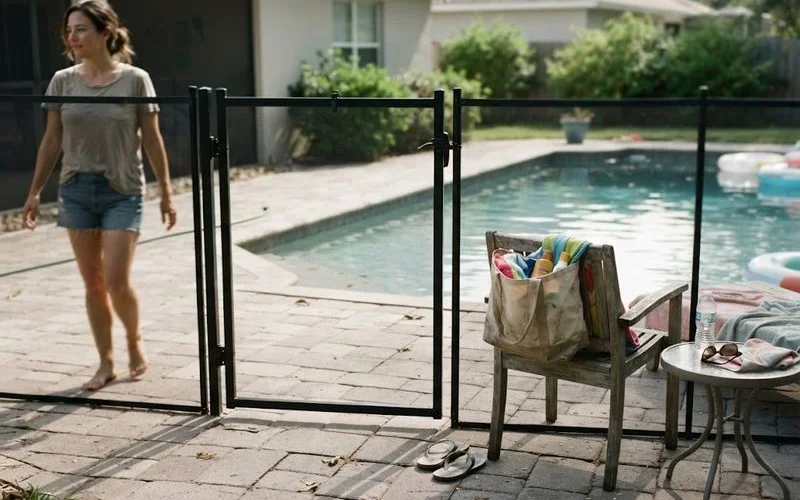
- A fence or wall of a specified minimum height, with no gaps a small child could climb through or fit under
- Self-closing, self-latching gates with the latch mounted out of a young child’s reach
- The house itself as one barrier layer, combined with door alarms or a powered safety cover if doors open directly onto the pool area
- An approved pool safety cover meeting the required specification
| Barrier type | Typical use case | Key requirement |
|---|---|---|
| Fence or wall | Freestanding pool enclosure | Minimum height, no climbable gaps |
| Self-latching gate | Any opening in a fence or wall barrier | Latch above child reach height |
| Door alarms | House wall used as part of the barrier | Audible alert when door opens |
| Safety cover | Alternative or supplemental layer | Meets load and coverage specification |
The specific combination that satisfies the law depends on your property’s layout, particularly whether any door or window opens directly onto the pool area. This is exactly the kind of detail worth confirming with your local building department rather than assuming.
When this matters most
New construction and full renovations both trigger a fresh look at barrier compliance as part of permitting, so your builder should be addressing this as part of the design, not as an afterthought. If you’re buying a home with an existing pool, checking barrier compliance is worth doing before closing, since retrofitting a non-compliant setup afterward is your cost to bear, not the seller’s. If you’re selling, resolving a known gap ahead of listing avoids it becoming a negotiating point during inspection.
Maintaining a barrier, not just installing one
A barrier that was compliant on the day it was installed can quietly stop being effective over time: a latch that sticks and gets propped open, a gap that opens up as a fence settles, an alarm battery nobody’s replaced. None of this shows up unless someone checks. A short, periodic walk-through, does the gate self-close and latch, are there any new gaps, do the alarms still sound, catches most of these before they matter.
Getting a straight answer for your property
Because compliance depends on your specific layout, the most reliable path is to ask your local building department directly, or have a licensed pool contractor evaluate your setup as part of a quote. A contractor experienced with Naples-area permitting will know the local building department’s current interpretation of the rule, which can be more useful in practice than the statute text alone.
For related reading on what to check when buying or selling a home with a pool, or on liability if someone is injured despite a compliant barrier, see those guides directly, or start from our home page for the full set. See our methodology for how we evaluate and rank the contractors in this directory.
A compliant barrier is worth getting right the first time, both because it’s the law and because it’s the actual thing standing between a distracted moment and a tragedy.
FAQ
- Does Florida law require a fence around every residential pool?
- Florida's pool safety law requires a barrier (which can be a fence, wall, or the pool structure itself combined with other approved layers of protection) meeting specific height and gap requirements. The exact combination of measures required depends on which compliance option a homeowner or builder chooses.
- Does a house wall count as part of the barrier?
- It can, but if a door or window opens directly onto the pool area, additional protection like an alarm, a self-closing and self-latching gate, or a pool safety cover is typically required alongside it. Check with your local building department for how this applies to your specific layout.
- Do I need a permit to install a pool safety barrier?
- In most cases yes, since it's tied to the pool construction or renovation permit itself. If you're adding a barrier to an existing pool that didn't have one, check with the local building department before starting work.
- What happens if my pool doesn't have a compliant barrier?
- Beyond the real safety risk, an out-of-compliance barrier can create liability exposure and can come up as an issue during a home sale inspection. It's worth resolving before either a child is at risk or a transaction falls through over it.