First-time pool owner's guide: what nobody tells you before you buy or build
By Nadia Nathan · Updated 2026-07-13
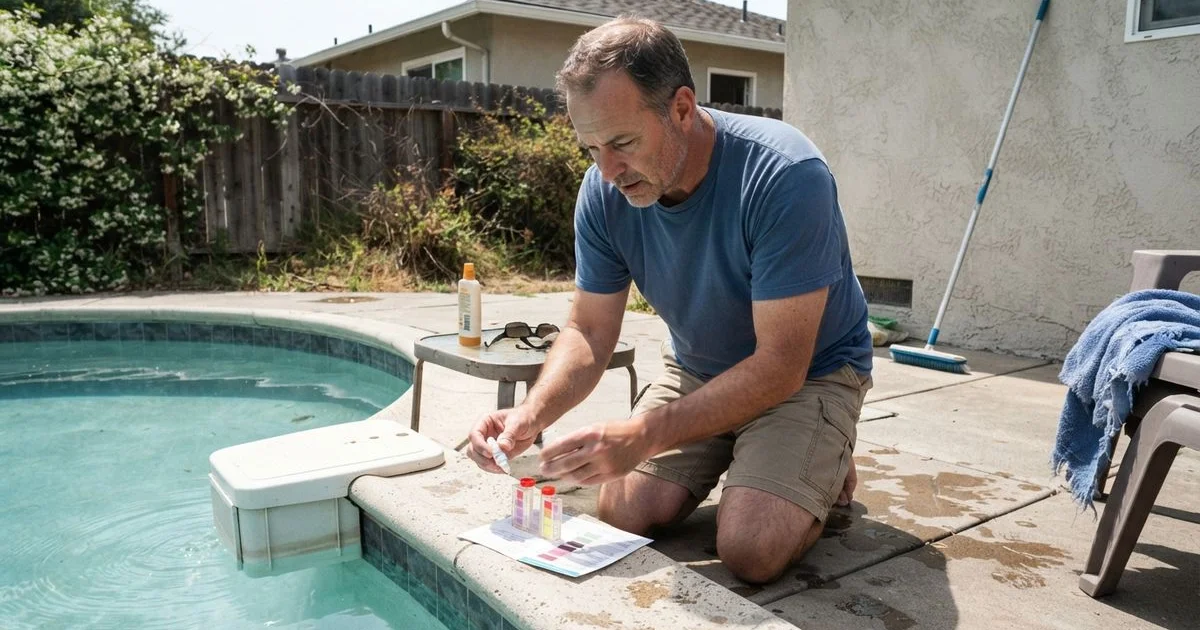
Buying a home with a pool or building your first one comes with a learning curve that most first-time owners climb the hard way. Here’s what tends to catch people off guard, so you can skip a few of the more expensive lessons.
The running cost is bigger than the sticker price suggests
Most first-time owners plan carefully for the purchase or build cost and then underestimate what it takes to run the pool well afterward. Between routine cleaning and maintenance service, periodic equipment replacement (pumps and heaters don’t last forever), and occasional resurfacing years down the line, a pool is closer to an ongoing utility than a one-time purchase. Budgeting a realistic monthly and annual figure upfront avoids the feeling that the pool is quietly draining money you didn’t plan for.
Learn your equipment before something breaks
You don’t need to become a technician, but knowing the basics, what type of pump you have, whether it’s chlorine or saltwater, roughly how old the heater is, saves real money and stress the first time something goes wrong. When a pump fails or the water won’t balance, knowing this baseline lets you have a much more useful conversation with whoever you call, rather than starting from zero under pressure.
| First-time owner habit | Why it helps |
|---|---|
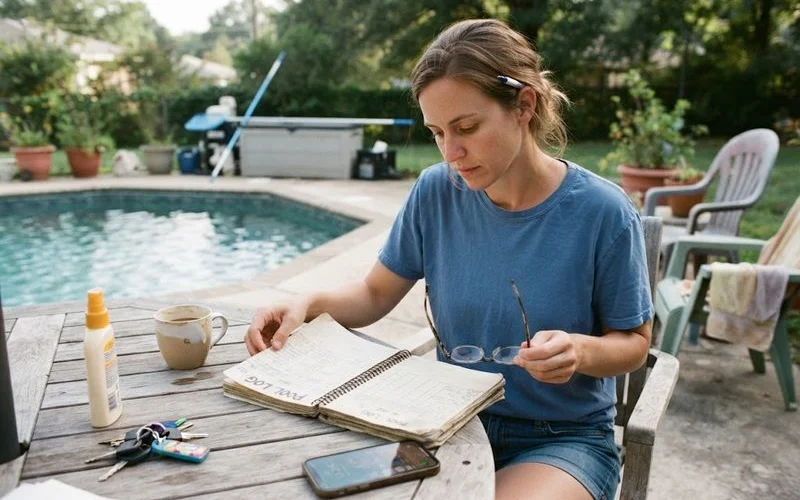
| Keep a simple maintenance log | Turns scattered invoices into a clear cost and repair history |
| Learn your equipment basics | Faster, cheaper conversations when something breaks |
| Start with full-service, adjust later | More forgiving while you learn what “well-run” looks like |
| Get 2-3 quotes for any real work | Prevents overpaying due to inexperience |
Hiring for the first time, without overpaying
First-time owners are more likely to accept the first quote they get, simply because they don’t have a baseline to compare it against. Get at least two or three quotes for anything beyond routine maintenance, a repair, a remodel, a new install, and ask each contractor the same specific questions so the answers are actually comparable. Check for a valid Florida contractor license covering the work in question, and ask for references from projects finished a year or more ago rather than only recent ones, since that tells you how the work actually held up.
Start more conservative than you think you need to
If you’re deciding between full-service maintenance and handling it yourself, or between a basic build and a loaded one with every feature, it’s easier to add more later than to walk back an expensive commitment you weren’t ready for. Start with full-service maintenance while you learn what a well-balanced, well-running pool actually looks and feels like, then shift toward DIY once you have that baseline, if it appeals to you. The same logic applies to features: a pool that’s easy to add a heater or automation system to later is a reasonable way to keep upfront cost down without closing off options.
The safety and legal basics you shouldn’t skip
Two things worth confirming early, not years in: whether your pool’s safety barrier meets Florida’s current requirements, and whether the pool and any additions were properly permitted. Neither is complicated to check, and both are far easier to sort out before you’ve settled into ownership than after a sale, an inspection, or an incident forces the question. If either is unclear, a licensed contractor can typically confirm both as part of an initial visit.
Building your team
Most owners end up with a small, informal team over time: a maintenance provider, someone for equipment repairs, and occasionally a specialist for bigger projects like remodeling. It’s fine for this to be more than one company. What matters is that each one is someone you’d actually call again, which you’ll only know after working with them once. If you’re thinking further ahead, our guide on low-maintenance pool upgrades for aging in place covers features worth building in early rather than retrofitting later.
Our swimming pool contractor hub is a good starting point for finding vetted local providers as you build that team. Our methodology explains how we score and rank the listings. And our home page links to cost, process, and safety guides that cover the ground in more depth than this overview can.
Most of what trips up first-time owners isn’t complicated, it’s just unfamiliar. A season or two in, most of this becomes routine.
FAQ
- What surprises most first-time pool owners in Naples?
- The ongoing running cost, both maintenance service and eventual equipment replacement, is the most common surprise. New owners often budget for the build or purchase but underestimate the recurring cost of keeping a pool running well.
- Should a first-time owner hire a full-service company or piece it together?
- Starting with a full-service maintenance provider is usually the more forgiving choice while you're still learning what a well-run pool looks like. You can always shift toward more DIY once you understand the baseline.
- How do I vet a contractor if I've never hired one before?
- Ask for references from jobs completed at least a year ago, not just recent ones, since that tells you how the work held up. Check for a valid Florida contractor license and confirm it covers the specific type of work you need.
- What's the single most useful habit for a new pool owner?
- Keeping a simple log of service visits, equipment ages, and any repairs. It sounds basic, but it's the thing that turns a confusing string of invoices into a clear picture of what your pool actually costs and needs.