Low-maintenance pool upgrades and safety for aging in place in Naples
By Nadia Nathan · Updated 2026-07-16
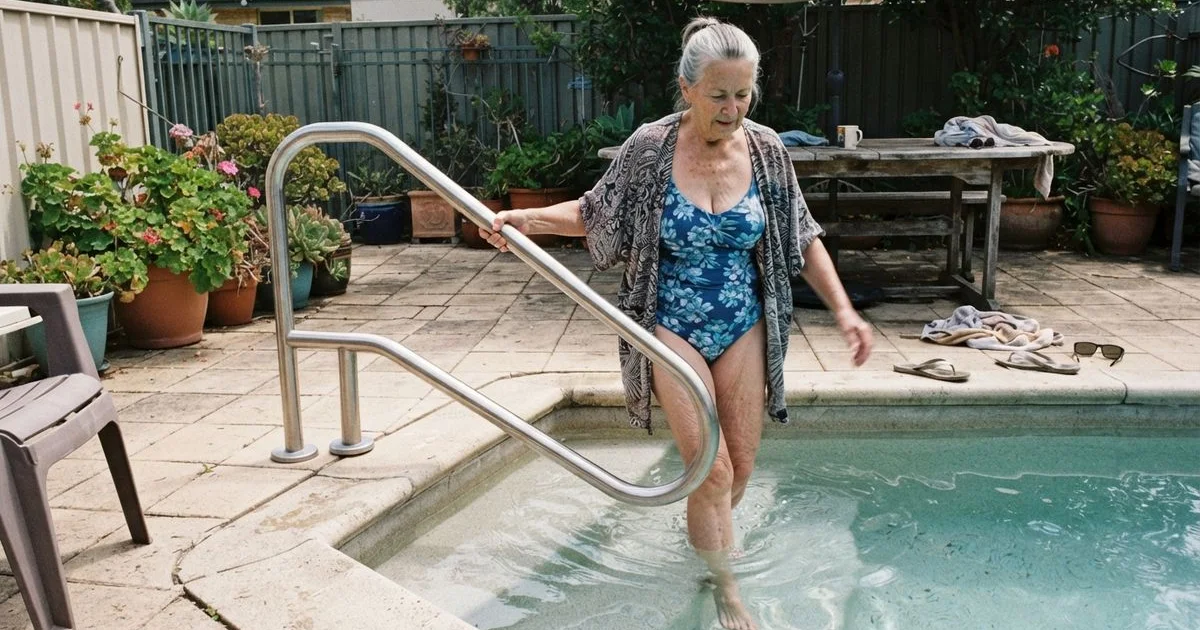
Staying in a longtime home with a pool, rather than moving to something newer or smaller, is a common choice in Naples, and a handful of targeted modifications can keep a pool enjoyable and manageable well into later years rather than becoming a maintenance burden or a fall risk. If you’re earlier in ownership, our first-time pool owner’s guide covers the running costs and hiring basics these upgrades build on.
Entry and exit come first
Steep steps, a single ladder, or a narrow entry point that felt fine for decades can quietly become the biggest barrier to actually using the pool as balance and mobility change. A few options address this directly: a wide, shallow sun shelf entry that doesn’t require steps at all, a properly installed handrail at existing steps, or a pool lift for those who need more support getting in and out. None of these require rebuilding the pool from scratch, most can be added to an existing shell.
Lowering the physical workload of ownership
Beyond entry, the day-to-day physical routine of pool ownership, testing water, adjusting chemicals, cleaning, is worth reducing if it’s become harder to keep up with. A pool automation system lets you control pumps, heaters, and chlorination from a phone or wall panel rather than manually adjusting equipment at the pad, which removes a real physical task from the routine. A salt chlorine generator reduces the manual chemical handling involved in day-to-day sanitizing, since it produces chlorine on-site rather than requiring regular manual dosing, though it still needs periodic attention.
| Upgrade | What it addresses | Typical effort to add |
|---|---|---|
| Wide shallow entry or sun shelf | Fall risk, physical difficulty entering/exiting | Moderate, usually part of a remodel |
| Handrail at existing steps | Balance support at a known pinch point | Low, can often be retrofitted |
| Pool lift | Full assisted entry and exit | Low to moderate, add-on equipment |
| Pool automation system | Manual routine of adjusting equipment | Low, mostly equipment and electrical |
| Salt chlorine generator | Manual chemical handling | Moderate, equipment addition |
Comfort and safety around the deck matter too
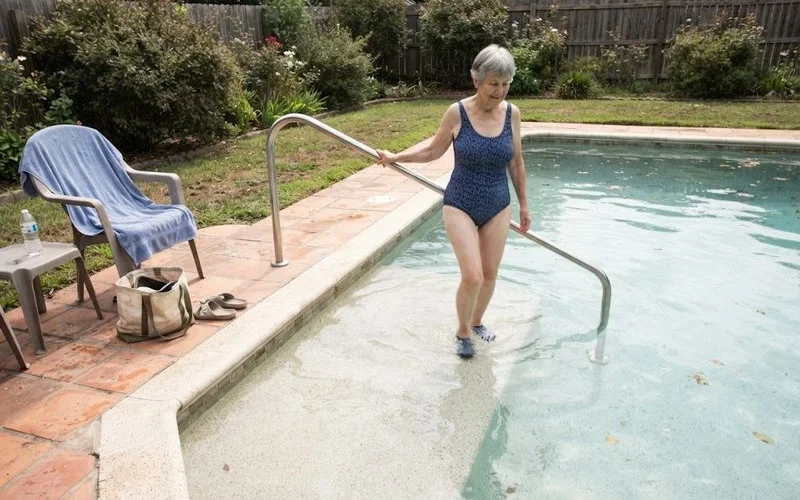
Entry into the water isn’t the only place mobility changes show up. A deck surface that’s become slick with age, algae, or wear is a fall risk on its own, independent of anything happening in the pool. Non-slip resurfacing or texture treatments on existing pavers or concrete, along with better handrail placement along walkways to the pool, address a hazard that’s easy to overlook because it’s outside the water rather than in it. Shade, whether from an umbrella, a covered lanai, or a pergola, is also worth considering, since prolonged direct sun exposure is a bigger concern for older adults, and it makes the space more usable during peak midday heat. Lighting is worth a look too, well-placed path and step lighting reduces the chance of a misstep during an evening swim, and it’s typically a straightforward addition alongside other electrical work if you’re already having a contractor on site.
Keeping professional maintenance in the mix
Even with automation and easier entry, professional maintenance service becomes more valuable, not less, as an owner steps back from the physical routine themselves. A weekly service handles the tasks that are hardest to keep up alone, brushing, filter cleaning, equipment checks, while automation handles the daily adjustments. The combination tends to work better than trying to replace a service entirely with automation alone.
Phasing the changes in
Most owners don’t do all of this in one project. A common, sensible order is entry and safety changes first (since those address the most immediate physical barrier and fall risk), automation next, and anything cosmetic or feature-related last. Spreading it out over a year or two is often easier on both budget and the disruption of having work crews in the yard.
Our custom and luxury features hub lists local contractors experienced with automation systems and specialty entry features like sun shelves and lifts. Our methodology explains how those listings are scored, and our home page links to related guides on maintenance cost and DIY versus professional service.
A pool that’s felt like more work than pleasure in recent years is often just a few targeted changes away from being genuinely low-effort again.
FAQ
- What pool modification matters most for aging in place?
- Easier, safer entry and exit is usually the highest-impact change, since steep steps or a ladder-only entry become a real barrier and a fall risk over time. A pool lift, a wide shallow entry, or handrails address this directly.
- Does pool automation actually reduce the physical workload of ownership?
- Yes, meaningfully. A pool automation system that handles scheduling, dosing, and equipment control from a phone or wall panel removes a lot of the manual routine that becomes harder with mobility changes.
- Is a saltwater conversion worth it for lower maintenance?
- Many owners find it reduces the manual chemical handling involved in day-to-day upkeep, since the system generates chlorine on-site rather than requiring regular manual dosing. It's not zero-maintenance, but it does shift some of the physical routine.
- Are these upgrades usually done all at once or over time?
- Most owners phase them in, often starting with entry and safety changes, then automation, then anything cosmetic. There's no requirement to do it all in one project, and spreading it out is often easier on both budget and disruption.