Pool and hot tub chemical safety: what actually poses a risk
By Nadia Nathan · Updated 2026-07-07
This is general information about pool and hot tub chemical safety, not medical or professional advice. If you have specific health concerns, especially involving children, respiratory conditions, or skin sensitivity, talk to a doctor, and contact poison control immediately for any suspected chemical exposure incident.
Where the real risk comes from
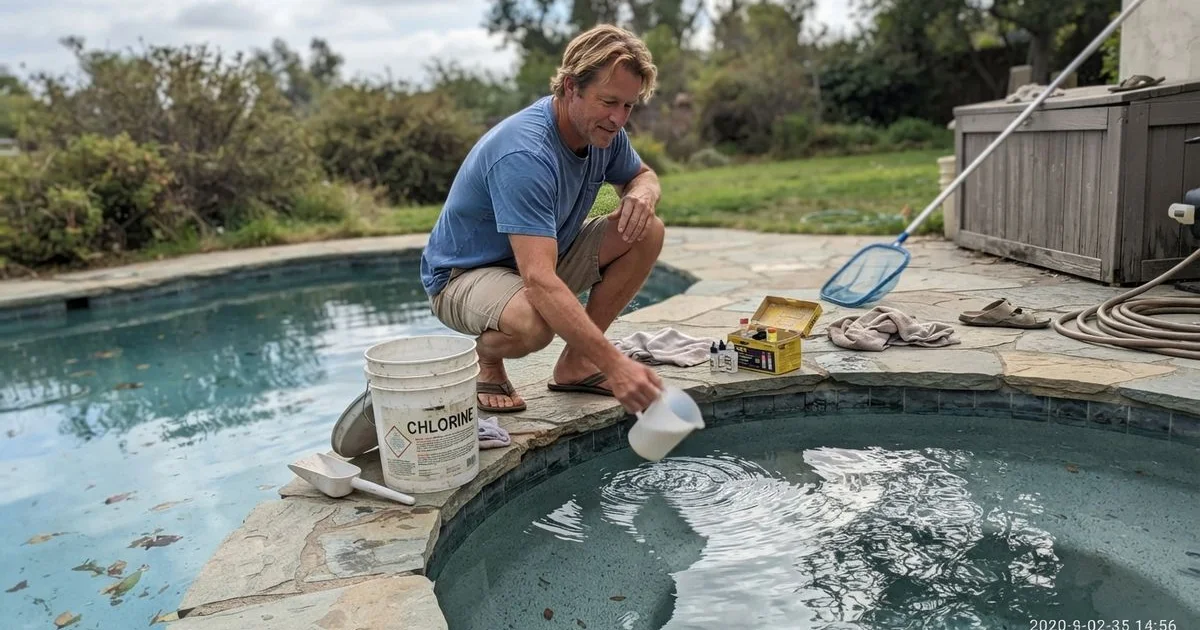
Most pool chemical incidents aren’t about the chemicals themselves being inherently dangerous when used correctly, they’re about storage and mixing mistakes. Chlorine products in particular react badly when combined with each other in concentrated form, especially different chlorine types (granular, tablet, and liquid) stored or added together. Naples’s heat and humidity add a second real risk: chemicals stored in a hot garage or shed degrade faster and can become less stable, which is a genuine safety consideration, not just a shelf-life issue.
Storage habits that actually matter
Keep chemicals in their original, labeled containers, in a dry, ventilated space out of direct sun and away from extreme heat. Never combine different chlorine products in one container, and never add water to concentrated chemical, always add the chemical to water if a manual mix is required, following the product’s specific instructions. Keep all pool and spa chemicals locked away from children, the same way you’d treat any household hazardous material.
| Risk area | What actually happens | What reduces it |
|---|---|---|
| Mixing chlorine types | Can cause a dangerous chemical reaction | Store and add products separately |
| Heat degradation | Chemicals lose effectiveness or become unstable | Store in a cool, ventilated space, out of direct sun |
| Under-treated water | Bacteria and recreational water illness risk | Regular testing, don’t skip weeks |
| Over-treated water | Skin, eye and respiratory irritation | Test before swimming after shock treatment |
Balancing water without overcorrecting
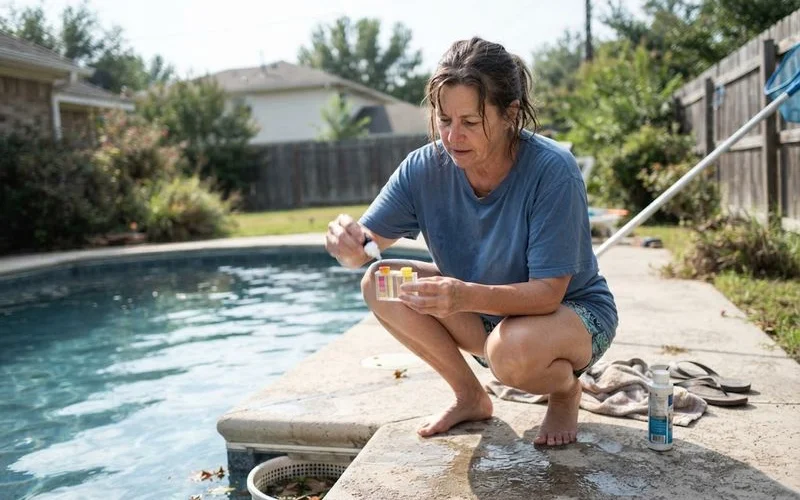
A common mistake in the other direction is overcorrecting after a bad test reading, adding a large dose of chlorine or pH adjuster and hoping it fixes things in one shot. Large swings are harder to walk back than small, regular adjustments, and heavily over-chlorinated water is genuinely uncomfortable and can irritate skin, eyes, and airways, particularly for kids or anyone with asthma. Testing more frequently and adjusting in smaller increments keeps the water in range without the whiplash of over- and under-correcting.
Hot tubs need more frequent attention, not different chemicals
A hot tub’s smaller water volume and higher temperature mean chemical levels shift faster than in a full-size pool, and a few bathers can measurably affect the balance in a single session. This isn’t a different chemistry, it’s the same chemistry moving faster, which is why hot tubs generally need testing before each use rather than the weekly cadence that works for a pool.
After heavy rain, the balance shifts fast
Naples gets intense, sudden downpours during summer, and a heavy rain event dilutes pool water and can wash debris and organic material in from the surrounding yard, both of which throw off chemical balance quickly. It’s worth testing water after any significant storm rather than assuming the rain was a minor event, particularly before letting kids swim right afterward. This is a different situation from routine weekly drift and often needs a specific rebalancing rather than the usual small correction.
When to call a professional instead of guessing
If your water won’t hold a stable balance despite regular testing and correct dosing, or if you’re dealing with a persistent algae bloom or unclear cloudy water, that’s a sign to bring in a professional rather than keep adding chemicals and hoping. Recurring imbalance sometimes points to an equipment issue (a failing pump or filter) rather than anything you’re doing wrong with dosing.
Our pool cleaning and maintenance hub lists local services if you’d rather have a professional manage water chemistry rather than handling it yourself. Our methodology explains how those listings are ranked, and our home page links to related guides on DIY versus professional maintenance.
Treating chemical storage and dosing with the same care you’d give any household hazardous material, and testing regularly rather than assuming, covers most of the real risk here.
FAQ
- What's the most common pool chemical safety mistake?
- Mixing different chlorine product types together, such as an old granular chlorine with a new liquid or tablet product, which can cause a dangerous reaction. Store and add chemicals separately, and never combine leftover product types in one container.
- Is a saltwater pool safer than a chlorine pool from a chemical standpoint?
- Saltwater systems still produce chlorine, just generated on-site from dissolved salt rather than added manually, so the water itself carries similar sanitizer-related considerations. The safety difference is mainly in reduced handling of concentrated chlorine product, not the water chemistry itself.
- Why does a hot tub need different chemical attention than a pool?
- Higher water temperature and a much smaller volume mean chemical levels and bather load affect a hot tub's water balance faster than a pool's. It needs more frequent testing, not necessarily different chemicals.
- Can improperly balanced pool water actually make you sick?
- Yes, under-treated water can allow bacteria and recreational water illnesses to develop, while significantly over-treated water can cause skin, eye, and respiratory irritation. Both directions carry real risk, which is why regular testing matters more than assuming the water is fine.